
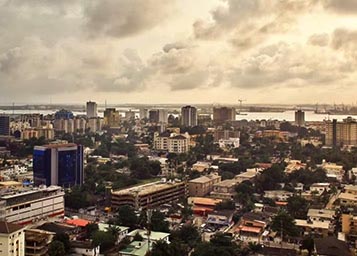
If you have been watching the real estate market in Nigeria, you have probably noticed one major trend, property prices in Lagos and Abuja just keep going up. Whether you are a renter, a first-time buyer or an investor, you may be wondering why houses and land are becoming more
expensive year after year.
The truth is that several important factors are pushing these prices higher, and those forces will
continue to shape the market throughout 2025. Below is a simple breakdown of the key reasons
why property costs will keep climbing in Nigeria’s two biggest cities.
1. There Are More People Looking for Houses Than the Available Supply
One of the biggest reasons for rising prices is the large gap between housing supply and
demand. Nigeria has a huge housing deficit, and Lagos and Abuja feel it the most because they
attract thousands of new residents every year.
People move to Lagos for business and job opportunities, while Abuja attracts government
workers, professionalsand families seeking a calmer lifestyle but the number of new houses
being built is far smaller than the number of people who need them. Developers also struggle
with rising costs, getting approvals and dealing with land issues. Due to the fact that there are
not enough homes to meet demand, the available ones become more expensive. Areas like Lekki,
Ajah, Surulere, Yaba, Gwarimpa, Apo, and Lokogoma are getting crowded fast, which increases
prices even more.
2. Building Materials and Labor Costs Are Getting More Expensive
Everything used in construction ,cement, rods, tiles, windows, plumbing materials, wiring, and
even sand has become significantly more expensive in the last two years. Inflation and
exchange-rate challenges make imported items cost even more. Since developers spend more
money to build, they increase the price of the final property. Some developers even pause their
projects or build in smaller phases because they can’t keep up with the cost.
In Lagos, developers also face the challenge of building on swampy land in places like Lekki and
Ajah, which requires deeper foundations, drainage systems, and sand-filling. All of this increases
the overall cost of building. In Abuja, strict building regulations and high land preparation costs
also add to the price. When construction is expensive, houses and land are expensive too.
3. New Infrastructure Is Making Some Areas More Attractive
Government spending on roads, bridges, rail lines, and industrial zones is creating new real
estate hotspots. When a new road or major project comes into a neighborhood, property prices
almost always rise.In Lagos, the development in Ibeju-Lekki is a perfect example. The Lekki Deep Sea Port, the Dangote Refinery and other big projects are attracting investors, workers,l and businesses. As a result, land in Epe, Alaro City, and nearby areas has appreciated very fast. Abuja is also seeing new growth, especially around new roads leading to airport areas, developingdistricts and expanding suburbs. As these places become easier to access, more people want to live or invest there and prices rise quickly. Infrastructure is one of the biggest drivers of real estate growth and 2026 will see even more expansion.
4. Investors Are Putting More Money Into Real Estate
In times of economic uncertainty, people look for investments that protect their money. Real
estate is a top choice because it rarely loses value and usually appreciates over time.Many
Nigerians especially the wealthy, the middle class, and those living abroad now see real estate as
one of the safest places to keep their money. Corporate organizations and investment groups are
also buying more land and luxury apartments.Areas like Ikoyi, Victoria Island, Banana Island,
Wuse 2, Maitama, and Eko Atlantic continue to attract investors. When more people compete for
properties, prices naturally go up. The increased demand from investors is one of the strongest
reasons property values will keep rising in 2025.
5. Government Policies and Regulations Are Influencing Prices
Lagos and Abuja have introduced policies that directly affect real estate.In Lagos, the
government is cracking down on unapproved estates, illegal constructions and developers
without proper documentation. While this protects buyers, it also makes land that has full
approval more expensive because it is safer and in limited supply.
In Abuja, the FCTA is going after landowners who have not paid their ground rent or land-use
fees. This is pushing many owners to quickly correct their documents, pay penalties, or sell at
premium prices.
These policies help organize the market but also increase costs, which reflect in final property
prices.
6. Modern Estates and Tech-Enabled Homes Cost More to Build
Today’s property buyers want estates with good security, constant light, smart home features,
solar power, treated water and professional facility management.Considering developers now
include CCTV systems, inverters, solar panels, fiber-optic internet and modern drainage, the cost
of building increases. These extra features make the homes more comfortable and secure but
they also raise the sale and rental prices.Tech-driven solutions are becoming the new standard,
and they will continue to push prices upward.
7. Prime Land Is Running Out
In places like Ikoyi, Lekki Phase 1, Victoria Island, Asokoro and Maitama, there is almost no empty land left. Developers often buy old properties, demolish them and build modern structures. This process is expensive, so new buildings in these areas come with very high prices.As long as land remains scarce in top neighborhoods, prices will keep rising.
The rise in property prices in Lagos and Abuja is the result of several strong factors: highdemand, expensive construction, infrastructure growth, investor interest, regulatory changes, modern building standards and land scarcity.
These trends show that real estate in both cities will continue to appreciate in 2026. For buyers
and investors, acting early might be the smartest choice, because the market shows no signs of
slowing down anytime soon.

